

What happens when someone who condemns Islamophobia openly spreads queer hate? In this provocative opinion piece, Sikhander Coopoo reflects on identity and moral inconsistency and asks, whose humanity is considered worthy of protection?
I recently spent a morning at a police station in KuGompo City (Eastern Cape), trying to open hate speech cases. Not because I enjoy fluorescent lighting and the particular despair of a hard wooden bench. One of those cases led me somewhere I did not expect to go.
On 27 April 2026, an image, taken at Metlife Shopping Centre in Nelson Mandela Bay, circulated on social media. A white GWM bakkie, registration plate visible, branded with a sticker reading: Death to Islam.
It is the kind of image that lands in your chest before your brain catches up. The way anti-Muslim hate manages to find you, no matter where you are sitting.
SAPS needed the exact location of the vehicle. In my search for evidence, I was led to a post on X that suggested that the sticker could amount to hate speech. The account belonged to one Mehmet Vefa Dag. My heart sank in two directions at once, and I want to tell you why.
When Fighting One Form of Hate While Fueling Another
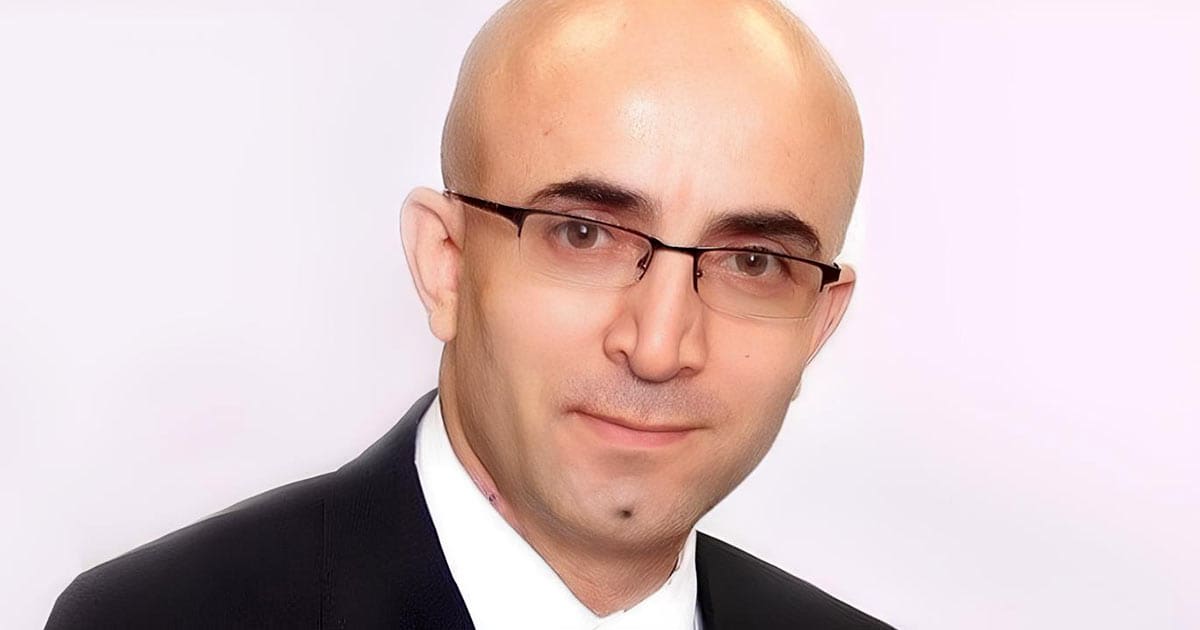
Mehmet Vefa Dag is a Cape Town politician who speaks out against racism, Islamophobia and war crimes against Palestinians, yet also boasts a formidable and exhausting portfolio of hatred.
Last year, the Western Cape High Court ordered him to stop posting defamatory content about Curro Schools and to remove those posts. He complied with the removal. He did not comply with the spirit of restraint. He kept going, landed himself in Pollsmoor Prison for ninety days, and faces Equality Court charges for antisemitism and hate speech. He is, by any reasonable measure, a man fluent in the language of harm.
He is also, and this is the part that stops me cold, notoriously and loudly queerphobic.
In June 2023, Dag declared war on what he called “f*g’s paradise.” He described LGBTQIA+ people as paedophiles. He took offence at a rainbow crossing painted on Somerset Road in Green Point. The kind of offence that requires significant effort to sustain in the presence of paint.
The Commission for Gender Equality called him out directly, warning that his rhetoric was “instigating violence.” His protest against the crossing flopped so spectacularly that drag queen Stella Rose simply stood there in defiance of him and, frankly, won the whole day without breaking a sweat.
Here is what I return to. This same man posted evidence of Islamophobia at a shopping centre. He was, in that moment, doing the right thing. He was sharing it to create awareness so that action could be taken.
And yet. How does the moral engine fire so cleanly in one direction and stall completely in another?
‘Too Queer for the Mosque, Too Muslim for the Queers’
I am a queer Muslim. I navigate this intersection daily. I know what it means to be told that my existence is a sin, and that I need to choose a different religion. I know what it means to be too queer for the mosque and too Muslim for the queers. I have also been told, by well-meaning allies, that my “whole thing” is very complicated. Honey. You have no idea.
The LGBTQIA+ Muslim experience is the intersection where two rising tides of documented violence meet. The Council on American-Islamic Relations recorded 8,658 anti-Muslim complaints in 2024, the highest in its nearly thirty-year history. In South Africa in 2024, thirteen LGBTQIA+ murders were documented as suspected hate crimes. Five of them happened in Nelson Mandela Bay in a single month.
The 2025 research published in Sexuality Research and Social Policy found that more than half of LGBTQIA+ South Africans had experienced verbal insults, more than a third had faced threats of violence, and nearly a quarter had experienced sexual assault.
Place a queer Muslim at the centre of these two realities. The wider Muslim community offers a spiritual home, but in many configurations, at the cost of self-erasure. The LGBTQIA+ community offers solidarity, but does not always understand that often, faith is not negotiable; it’s not something you leave at the door.
The Psychology of Selective Empathy
What allows Dag, and many others, to oppose one form of hate while actively manufacturing another? This psychology has a name. Selective empathy, powered by in-group and out-group bias. When you see your own group targeted, the brain fires with recognition, outrage, and moral clarity. When the targeted group is one you have already decided is threatening, deviant, or deserving of dislike, the empathy circuitry goes quiet. You did not run out of moral feeling. You redirected it.
Cognitive dissonance does the rest. If you consider yourself a good person but hold views that would harm others, your brain constructs reasons. They brought it on themselves; it is not really hate. The group is fundamentally problematic. The discomfort dissolves. The behaviour continues.
I see this in activist and queer spaces too. We are not exempt. We fight Ngizwe Mchunu’s xenophobia yet remain silent about his queerphobia. We march under rainbow flags and carry “no fats, no femmes, no spice, no rice, no chocolate” in our dating app bios. Selective empathy is a human failure, and it is ours to correct.
A Moral Framework That Cannot Pick and Choose
The South African Muslim community has developed, through sacrifice, through legal courage, through decades of moral clarity, powerful frameworks for naming oppression. The Imams who stood against apartheid. The activists who helped build the ICJ case. The community leaders who gathered after Christchurch said that anti-Muslim hatred is everyone’s problem. This tradition is extraordinary. Which is exactly why the hate and silence about queer Muslims is so incoherent and so indefensible.
You cannot hold a moral framework that condemns the dehumanisation of Muslims by outside forces and simultaneously apply dehumanising language to queer Muslims. You cannot say silence is complicity when the subject is Palestinian lives and then say silence is wisdom when the subject is queer Muslim safety in South Africa. The framework either holds, or it doesn’t. Moral consistency is not optional.
The most dangerous thing about Dag is not that he is one man with bad views. It is that his behaviour models the idea that you can hold a legitimate grievance about your own oppression while enthusiastically participating in someone else’s.
Hajee Dawjee named the machinery precisely: “Their morality is an old, rusted machine, built from the same spare parts as the oppressor’s – dehumanisation, supremacy, fear wrapped up in holy verses misread and misused. The story of Lot is a warning against oppression. It was never an instruction manual for it.”
A criminal case has been opened at SAPS, and a complaint lodged with the South African Human Rights Commission for investigation.
Sikhander Coopoo is a Humxn Rights Defender, who happens to be Queer AND Muslim. Sikhander serves on the Gender and Sexuality Alliance of East London committee and writes in his own capacity.




One Comment
If it’s hate I ask why hate. But it depends on what you are hating. Don’t hate on Queers as Queers or gays are about love. Being gay means one man loves another man. Love is good. I don’t hate Muslims. I hate their beliefs as they say kill infadels which means they don’t value life and it says that they can lie if it is for a good. It can’t be good if it’s a lie. A lie is a sin and sin is evil