
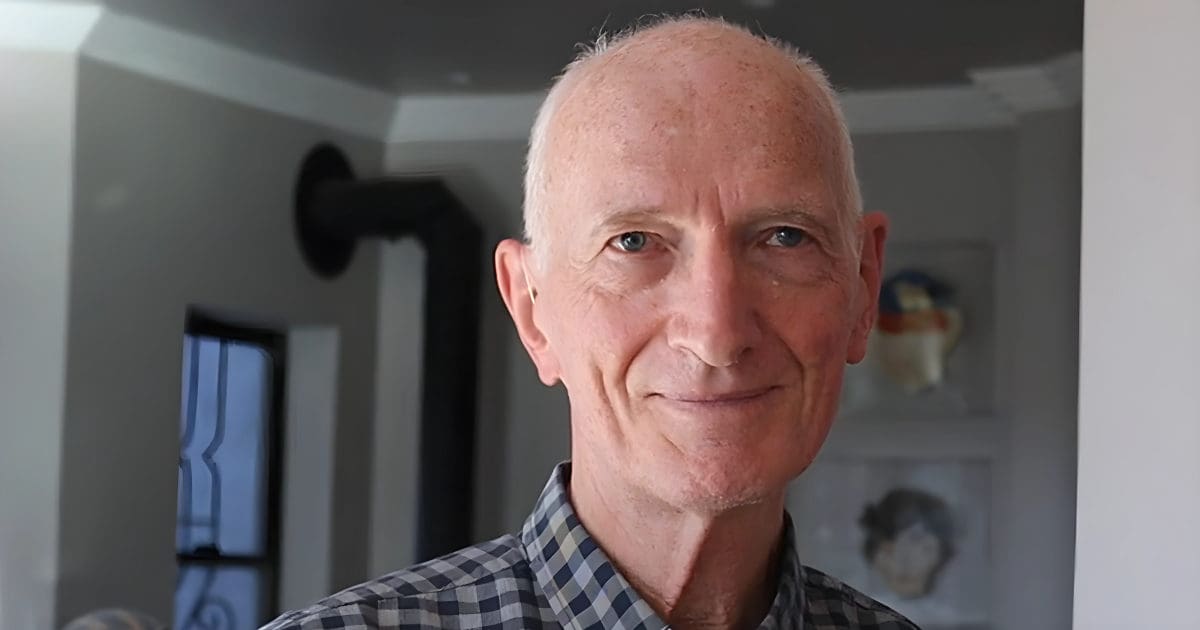
MambaOnline’s Managing Editor, Nompilo Gwala, had the opportunity to sit down with former Constitutional Court Justice Edwin Cameron at his home in Johannesburg for an in-depth catch-up about what he has been up to since retiring from the South African judiciary, and to hear his thoughts on some of the pressing issues affecting LGBTQ+ people in South Africa and across the continent.
Cameron stepped down as a judge in South Africa in August 2019 after 25 years on the bench. He was subsequently appointed as an inspecting judge of prisons, a role he held for six years. He remains a judge of appeal in Botswana’s Court of Appeal in Gaborone, serving part-time as a non-resident judge.
As an out gay man living with HIV and a long-standing advocate for LGBTQ+ equality, HIV awareness and a more humane approach to criminal justice, Cameron remains deeply engaged with issues affecting marginalised communities.
In this wide-ranging conversation, he reflects on his own journey, the progress made by queer people, the growing backlash against LGBTQ+ rights across Africa, South Africa’s responsibility towards LGBTQ+ refugees and migrants, the use of “family values” to oppose queer rights, and his message to the next generation of activists.
MambaOnline: Justice Cameron, let’s start with how you are. How’s retirement? How is life without waking up every morning and going to work as a judge?
Edwin Cameron: First of all, I’d like to say I’m very well. And second, I’d like to say that I’m really pleased to be working with MambaOnline because it’s an important voice and an important resource. I think MambaOnline is a rich and important part of queer life in Africa.
But to get to your question, I’m gradually moving into retirement. [But] I’m still a judge in Botswana. I’m a judge of appeal in the Court of Appeal in Gaborone. So it’s a part-time job for a non-resident. I’m not entirely retired.
I don’t wake up in the morning and think, “Oh, the pretty flowers and the birds are singing. I’ve got nothing to do.” Maybe I’ll get there one day.
But it’s very nice still to be occupied, to be busy, to have people ask you to do things which make you feel useful and which make you feel that you’re contributing.
And I’m going to add one thing, which is that after nearly 29 years on antiretrovirals, I’m really well, very healthy and vigorous and well. And I’m grateful every single day for that health and for that well-being.
“I’m proud to say I’m queer.”
MambaOnline: Looking at your career and the decades that you’ve spent advocating for justice and equality, what gives you hope about the progress that has been made, and what are some of the concerns that you still have?
Edwin Cameron: I think let’s start with the hope. What gives me hope is that LGBTI people, queer people as I call them, are increasingly asserting themselves. I know that not everyone is comfortable with the idea of “queer”, but I love the word queer because I grew up terrified of it.
I grew up thinking that if anyone ever thought I was queer or called me queer, it would be the end of my life. And now I’m proud to say I’m queer.
We stigmatised ourselves with that word, with “moffie”, with “sissy”, with “pansy”. It’s wintertime and right outside here, my apartment planter has pansies planted in it. I look at every pansy and I think, “Yes, I’m also a pansy.”
So that’s what gives me hope: there are so many pansies and dykes and queer people in Africa, and trans people.
It’s important to mention trans people because all of our genders are not unchangeable. They can be fixed, they can be determined and chosen, but they’re never unchangeable.
So I think across Africa, there is a greater assertion.
What troubles me is that there’s also a greater pushback.
There’s a lot of hatred, a lot of stigma and a lot of toxic poison about gay, lesbian, transgender and intersex people. That takes the form of arrests, violence, criminal trials, laws, statutes and threats.
Across many African countries, in Ghana, there’s a terrible threat of a new law. A similarly bad law was enacted in 2012 in Nigeria, and another was enacted recently in Uganda.
We know that there are arrests, repression and terror used against queer people across Africa.
So that’s what troubles me. But I think there is hope even about that.
MambaOnline: You’ve touched on the African context. Given that South Africa’s Constitution protects LGBTQ+ people, how concerned are you about the rollback we’re seeing in other countries and the impact that this could have on South Africa?
Edwin Cameron: I think it’s absolutely right that we can’t be complacent. We can’t sit on our dining room chairs, as I’m sitting now, and think, “It’s okay here.” It’s not.
For many years, I think South African activists and South African queer people, black and white, middle class and working class, thought we’re okay.
But as we’ve seen in America, where horrific rollbacks and horrific repression have occurred, and where trans people are being viciously targeted, nothing is safe.
People would have thought that after the 2015 decision of the Supreme Court in America, which enforced the right to gay and lesbian marriage, marriage equality, that it couldn’t happen in the United States. And it has.
Here we have anti-constitutional parties. The MK (uMkhonto weSizwe) Party is directly anti-constitutional. I’m not allowed to talk about politics as a retired judge, and I don’t. But I am entitled to talk in favour of the Constitution.
I think that those who oppose the Constitution, who oppose human dignity, who oppose equality, who oppose constraints on governmental power, which is what our Constitution is about, are a danger to our community, meaning the whole of South Africa. So I think that it can happen here too.
“A disgraceful shame on our whole country.”
MambaOnline: There is currently a major debate in South Africa around illegal and undocumented immigrants. Many LGBTQ+ people from across the continent are living in hardship because of anti-LGBTQ+ laws in their home countries. As a country whose Constitution protects LGBTQ+ people, what responsibility does South Africa have towards LGBTQ+ migrants and refugees who come here seeking safety? And how concerned are you about the impact that anti-immigrant sentiment could have on already vulnerable LGBTQ+ people?
Edwin Cameron: I think we should all be concerned. I think it’s a worrying time. Again, I don’t speak about politics. I won’t speak about the (MK-aligned) March to the extent that it is peacefully assembling and peacefully articulating its demands.
But what is also happening, undoubtedly, and I’ve seen this and I’ve read about it in reliable reports, is that there is terror, intimidation and horror being inflicted on cross-border migrants, which makes me deeply ashamed. Deeply ashamed as a South African who grew up under apartheid, who was a lawyer opposed to apartheid and who has been a proud judge under our Constitution.
Turning people away from essential services, terrorising young children, mothers and children, families, it’s a disgraceful shame on our whole country.
And I would say that none of those actions are lawful. That’s why I’m entitled to speak out about unlawful action, even as a judge.
But I would go further.
I would say that South Africa has been a haven for asylum seekers. The first case of an asylum seeker that I dealt with in the late 1980s or early 1990s, I can’t remember the exact time, was an asylum seeker from Ghana.
His name was Kofi, which is a common Ghanaian name. It means the day of the month upon which you were born.
I’m sorry that I lost contact with Kofi. I kept in touch with him for some time. He found a place in Port Elizabeth, as it was then called, and he was a shoemaker. He had skills.
I feel terribly ashamed that people like Kofi are no longer being welcomed to South Africa, which is a haven and a tower of light for queer equality in Africa.
I think that we have a responsibility.
I, as a queer person, and MambaOnline viewers and listeners have a responsibility to speak out against the terrorisation of LGBTI refugees and asylum seekers.
We owe a responsibility to them because we have constitutional protection and a claim to equality that they don’t have.
“We are part of every family…”
MambaOnline: Let’s touch on the Family Values Conference that’s coming up in Cape Town next year. These movements often frame their opposition to LGBTQ+ rights around family values, traditional families, religion and culture. How do you respond to the use of “family values” as an argument against LGBTQ+ rights? And what do you think is really at stake when this language is used to justify limiting the rights of queer people?
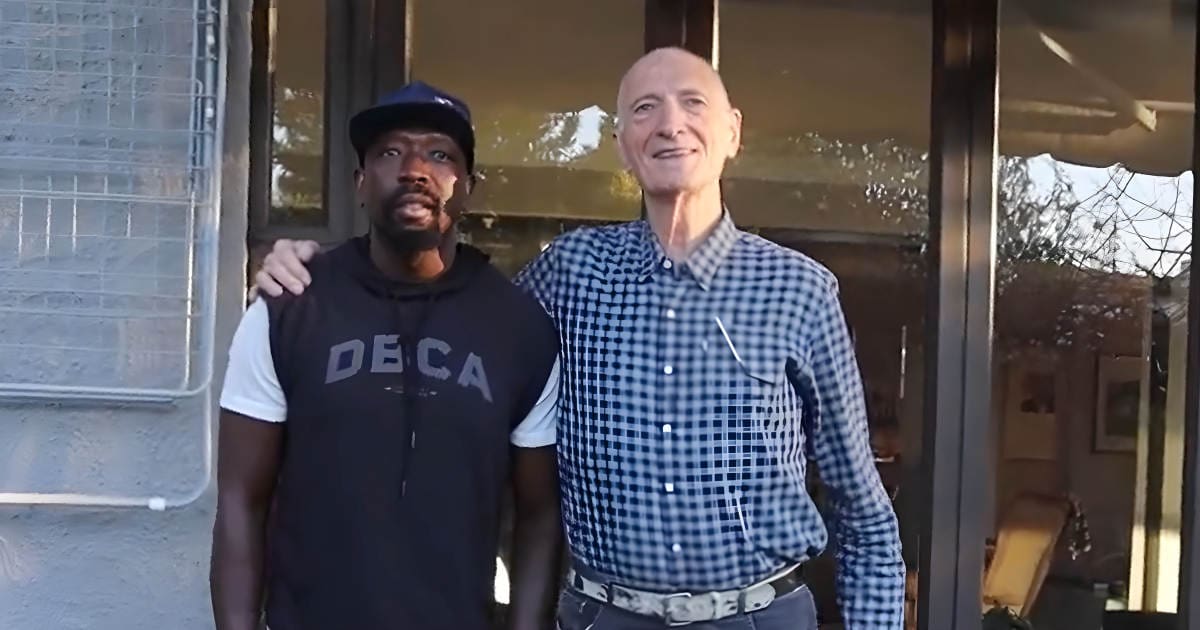
Edwin Cameron: Well, first of all, I’m strongly in favour of family values. I’m part of a family with Nhlanhla [Cameron’s long-time partner, Nhlanhla Mnisi], and Nhlanhla is part of my family. My family loves Nhlanhla dearly. So we are a family.
The important thing to say, and I hope that the organisers of the conference will ask me to speak, is that if they ask me to speak, I will go.
I have always said that I’m willing to appear on any platform, anywhere, in defence of the normalisation of queer people and the equality of queer people.
So I’m waiting for the invitation. If the organisers hear me speaking, I hope they will invite me.
What I will say is this: there’s not a single family in Africa, North Africa, in the Muslim countries, the Islamic north of Africa, in West Africa, Central Africa, Southeastern Africa or Southern Africa that doesn’t have a queer person in it.
They just don’t know it.
There’s a queer uncle or a queer cousin or a queer sister or brother or a queer parent. And because of the silence, because we are invisible, people don’t think that I’m queer.
Most queer people, most LGBT people, are not visibly LGBTI. That’s partly our strength, but I also think it’s our disadvantage.
So those people are all part of the “family values” that are coming to Cape Town next year.
And I just hope, and I’ll make this message directly to the organisers and attendees of that conference: be gentle with yourselves, be respectful with yourselves.
If you are gentle and respectful and listen to yourselves, you will be gentle and respectful to queer people, to LGBTI people as well.
We don’t deserve stigma. We don’t deserve harassment. We don’t deserve to be denigrated. We don’t deserve to be isolated and marginalised.
We are part of humanity. We are part of every family.
Being queer, being LGBTI, is part of normal humanity and has been for thousands of years.
Seven percent, at least some people say it’s ten percent, of all people on Earth, that’s seven or eight billion people, maybe six to seven billion people, have some part of queerness in them.
They may not recognise it. They may not realise it. But we are part of humanity. Please respect yourselves as human. Respect us as human.
MambaOnline: You’ve spoken about South Africa as a safe haven for LGBTQ+ people. We have a Constitution that’s supposed to protect us, but in many cases we still experience discrimination and violations. Why do you think there is still such a major gap between what we have on paper and what is happening in reality?
Edwin Cameron: I think it’s a failure of implementation, and it’s not peculiar to queer equality. We made so many promises to ourselves. We promised ourselves to turn our backs on racial discrimination and gender inequality and discrimination.
We promised ourselves that we would implement social and economic rights: water, food, housing, healthcare, education. All of those were promises that we made.
They weren’t instant promises. They were progressive realisations of all the rights, and we have been failed largely by government.
But all of us have failed. Every single one of us, including myself.
We have not done enough to realise those rights to equality and dignity, including the rights of sexual orientation equality.
So, to answer your question, it’s a failure of implementation.
There’s a gap in gender equality, racial equality and social and economic rights.
But nevertheless, I know that sexual orientation equality means something. It isn’t a failure at all.
Our Constitution is not a failure.
Our Constitution has achieved many millions of houses. It’s achieved some social and economic rights progress. It’s achieved a dignity for every South African.
And I know that young queer South Africans, young students, there will be youngsters who are listening to us now, and I say to you: thank you for listening to us.
We are proud of you. Be proud of yourself as a queer person.
Don’t be scared. Be careful. You’ve got to be careful about who you speak to, but speak to those you feel safe with, and slowly your circle of pride in your own self as a queer person will broaden.
MambaOnline: You’ve been a long-standing advocate for a more humane approach to criminal justice and drug policy in South Africa. We’ve recently also seen the launch of a new coalition calling for the decriminalisation of personal drug use. Why is this conversation important to you, and what does the way we criminalise certain behaviour tell us about society?
Edwin Cameron: I think there are a number of important points to make. The first is that the criminal law is a very blunt instrument, and we know that under apartheid because millions of Black men primarily, but also some Black women, were imprisoned under the laws of the past.
So we entered democracy knowing that the criminal law could be cruelly used and misused.
In my view, the criminal law is badly misused against sex workers, whose dignity demands that they should be able to choose their sexual partners when and where they wish.
I believe the criminal law is also misused with drug policy.
I’m not saying that drugs don’t inflict harm. Smoking does. Alcohol does. Yet we don’t criminalise smoking and alcohol.
The same applies to very many drugs.
Fentanyl, for example, is a terribly dangerous drug. But I’m saying that to use the criminal law against drug users is a terrible mistake.
We are instigating the violence on the Cape Flats. We are enabling the criminal gangsters who run rampant on the Cape Flats and increasingly elsewhere in our marginalised townships.
I’m not saying that the criminal law enables the gangsters. It enables the criminal syndicates from which people profit right up into the high places of our society.
Rather, like with smoking, like with gambling, like with alcohol, use a public health approach. Say it’s wrong. It’s bad for you. You can’t use this. Don’t use it. Protect yourself. Respect yourself. There’s help for you.
We can use the money that is wasted on criminal approaches to drugs and sex work rather to have a public education campaign and public health facilities to help people using drugs.
MambaOnline: Looking towards the future, what do you hope to see for queer people in South Africa and across the African continent? And what would you say to the next generation of LGBTQ+ activists, leaders and allies who will be responsible for protecting the gains that have been made and pushing the struggle for equality forward?
Edwin Cameron: That’s such a big question. I love it. And what I would say is a couple of things.
We’re here. We’re queer. It’s a slogan, but it’s true. We are here. We are in it radically. You’re not going to punish or imprison or kill every gay person on Earth. You can’t do it because we are part of humanity.
The second thing I would say is what Archbishop Desmond Tutu, who was a wonderful man, said. He said, “really, it’s not a big deal. Queerness, LGBTI, is not a big deal.” He said there are floods, there are fires, there are earthquakes, there’s climate change, there are dictators, there is brutality, there are mass slaughters on the African continent.
Don’t bother your mind about the fact that there are queer people. We’re not out to harm anyone. We’re not out to convert anyone.
So to the next generation of activists, which you ask about, I would say: take heart. Take heart in the fact that queerness is ineradicable from humanity, from humankind and from our Earth. Take heart in that and move forward to dignity, equality and pride for every queer person on Earth.
“I’m grateful that I’ve been able to help destigmatise HIV”
MambaOnline: Looking at your journey and the contributions you’ve made to society, what are you most proud of? And perhaps what is something you wish you could have changed?
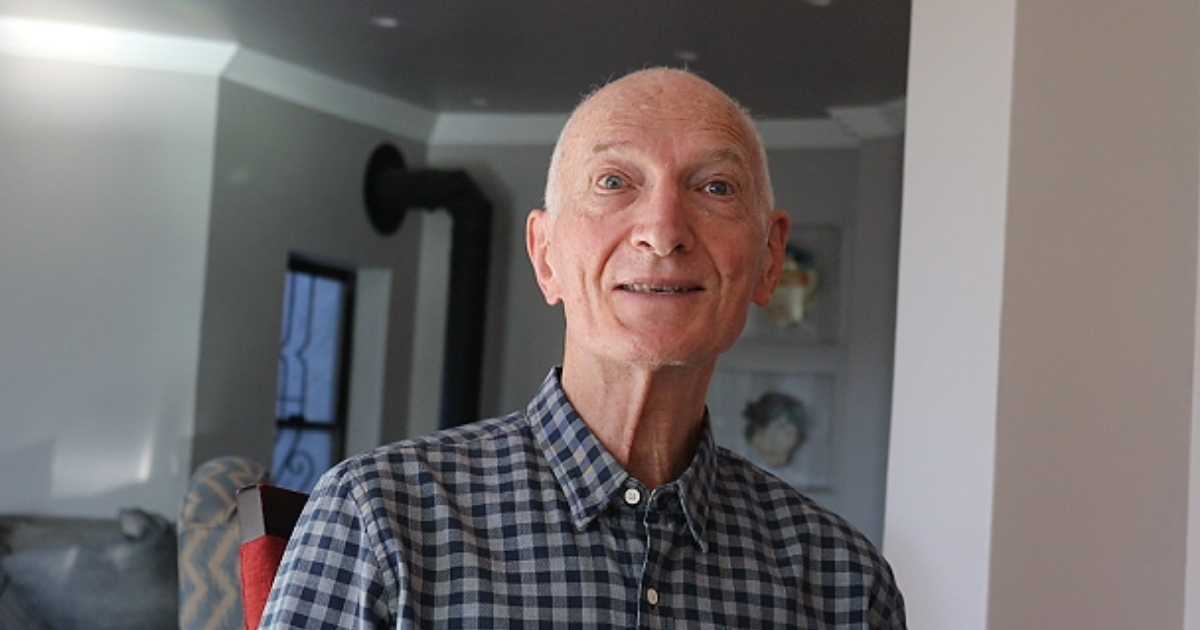
Edwin Cameron: I think what I’m not proud of, but what I’m grateful for, is that I’ve been able to make a contribution to destigmatise HIV and to promote the use of ARVs. In a few months’ time, in November, I will have been on antiretroviral treatment for 29 years.
Every time I say that, I’m proud of the fact that I’m helping someone. I hope that even in making this article, which will go onto the MambaOnline website, I hope I’m encouraging someone.
Don’t be scared of HIV. Be careful about HIV. You don’t want to get HIV. You don’t want to get hypertension, high blood pressure. You don’t want to get diabetes. So be careful, but don’t be scared, because there’s treatment.
Once you’re diagnosed, you will start that very day on triple combination therapy, which will keep the virus right in the corner where no one can see or hear it. So that, I wouldn’t say it’s a matter of pride, but a matter of gratitude and a sense of some progress.
There’s still a long way to go because HIV is still stigmatised.
What would I change? What I would have wanted to have changed is that I think South African LGBT+ people have been too complacent. And I think that I was part of that complacency. I watched it.
I think that our NGOs have also been too complacent. They haven’t been active enough. They haven’t been concerned and troubled enough. I think that South African queer people thought that the Equality Clause, which was a worldwide achievement, the first constitution anywhere in the world in history that had those two words, “sexual orientation”, would protect us.
And I think that made us sit back, and I regret that. And in my career, I think I could have been more outspoken. I was outspoken, but not enough.