

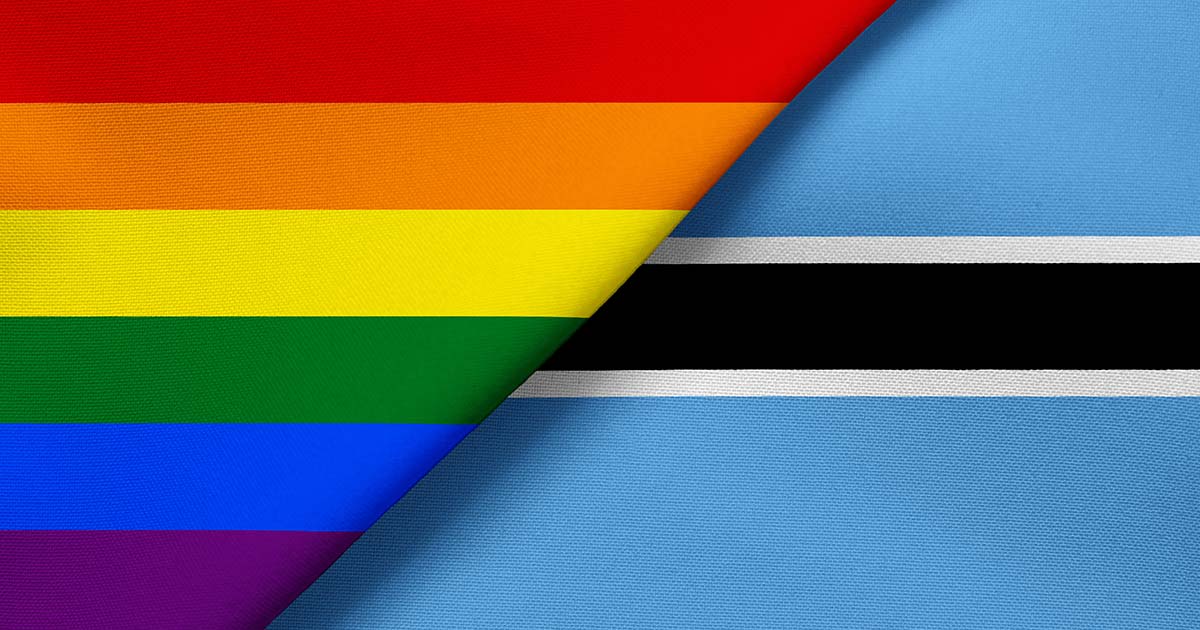
More than six years after Botswana’s courts struck down the ban on same-sex intimacy, the government has now formally removed the discriminatory provisions from the law.
It has emerged that, on 26 March, the government published a notice amending the Penal Code by deleting paragraphs (a) and (c) of Section 164, which refers to “Unnatural Offences”.
Colonial-Era Provisions Scrapped
The provisions criminalised any person who “has carnal knowledge of any person against the order of nature” or “permits any other person to have carnal knowledge of him or her against the order of nature”, with penalties of up to seven years’ imprisonment.
The Attorney General of Botswana, Dick Bayford, has now removed these paragraphs, leaving only the actions of anyone who “has carnal knowledge of an animal” as an unnatural offence.
The change is in line with the landmark 2019 ruling by the Botswana High Court, which the Court of Appeal upheld in 2021. The courts found that criminalising consensual same-sex sexual activity violates the constitutional rights of LGBTQ people to dignity, liberty, privacy, and equality.
“Personal autonomy on matters of sexual preference and choice must, therefore, be respected,” said the High Court at the time. “Any criminalisation of love or finding fulfilment in love dilutes compassion and tolerance.”
Activists Welcome Long-Overdue Reform
Local LGBTIQ+ organisation LEGABIBO welcomed the government’s move, describing it as “a necessary and long-overdue step toward restoring dignity and aligning our legal framework with constitutional values of equality and human rights.”
The group said the change sends “a clear message that LGBTIQ+ persons are not criminals, and that their lives and relationships deserve protection, not punishment.”
LEGABIBO noted that the colonial-era provisions had long cast a shadow over the lives of LGBTIQ+ people in the country.
“For many, these provisions were not just words on paper – they were lived realities. They affected access to healthcare, safety, employment, and the freedom to love and exist openly.”
“Even after being declared unconstitutional, their continued presence in the law has sustained stigma, justified discrimination, and contributed to fear, silence, and exclusion within our communities,” the group added.
Ongoing Fight for Equality
LEGABIBO said that while the amendment does not erase the harm of the past, “it creates space for healing, inclusion, and continued progress toward full equality.”
The LGBTQ community continues to push for broader legal recognition in Botswana.
A same-sex couple, Bonolo Selelo and Tsholofelo Kumile, are currently challenging the constitutionality of the country’s Marriage Act, arguing that it discriminates against them by denying them the right to marry. The case is set to resume in the High Court in July.





One Comment
A big thank you to all who stood up for their truth, to the activists for their bravery and resilience, and those behind the scenes who never gave up.