

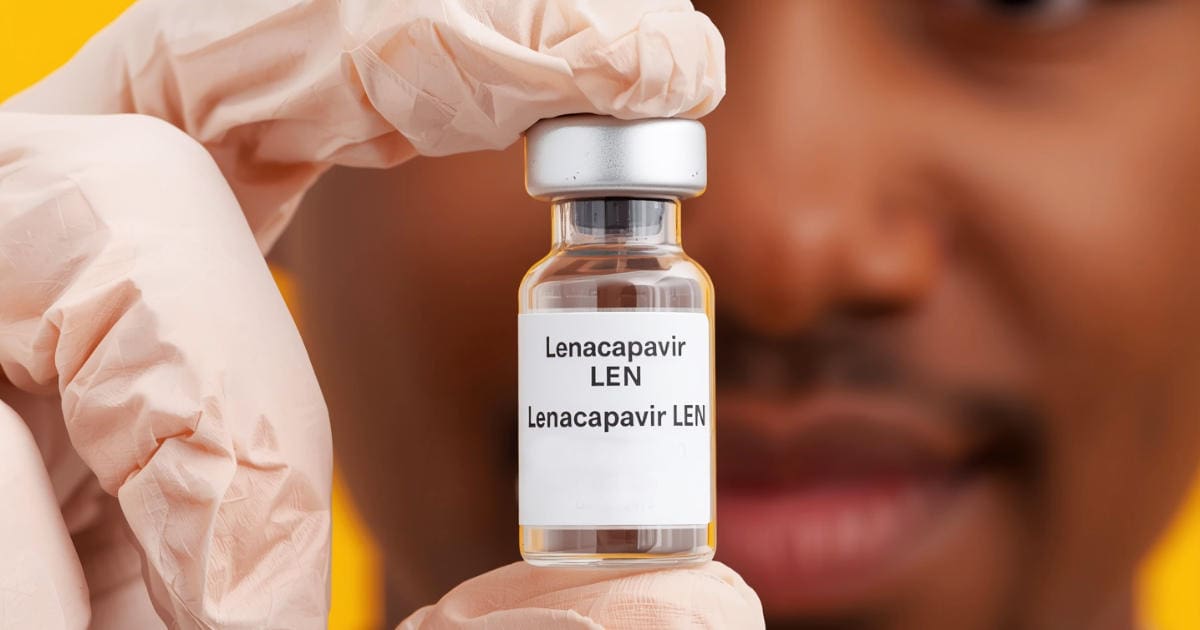
LEN, a groundbreaking new HIV prevention option, is now finally available in South Africa — and it could make taking PrEP much easier.
Lenacapavir, commonly known as LEN, is a new long-acting form of PrEP (Pre-Exposure Prophylaxis) that only needs to be taken twice a year as a set of injections, avoiding the need for daily HIV prevention pills.
It’s all about offering you more options to stay HIV-free. Here’s everything you need to know about LEN, how it works, who can use it, and where you can access it.
What Is LEN?
- LEN is a long-acting HIV prevention injection that helps stop HIV infection before exposure occurs.
- Unlike traditional oral PrEP, which requires taking a tablet every day, LEN is given as two injections under the skin every six months.
- LEN contains an antiretroviral medicine called lenacapavir, which slowly releases into the body over time to provide ongoing protection against HIV.
- When used correctly, LEN is more than 96% effective at preventing HIV infection.
- The injections are usually given just under the skin in the stomach area or buttocks.
Who Can Use LEN?
LEN can be used by people who:
- Test HIV-negative
- Weigh 35kg or more
Who Can Access LEN?
South Africa’s initial rollout of LEN is focused on groups at higher risk of HIV infection, including:
- Gay, bisexual and other men who have sex with men (MSM)
- Transgender people
- People who inject drugs
- Adolescent girls and young women up to the age of 24
- Pregnant and breastfeeding mothers
- Female sex workers
How Do You Start Using LEN?
When starting LEN for the first time, you will:
- Receive two injections at the clinic
- Take two tablets to take at the clinic on the same day
- Receive another two tablets to take at home the following day
It is very important that the tablets taken on day one and day two are taken exactly 24 hours apart.
You will then return to the clinic after one month for an HIV test and check-up.
After that, you return every six months after your first injections for your next two injections.
How Soon Does LEN Start Working?
LEN starts protecting against HIV from day three — but only if you received the injections and took the tablets correctly on both day one and day two.
Are There Side Effects?
Most people tolerate LEN well. The most common side effects are mild reactions where the injection was given, including:
- Redness
- Pain
- Swelling
Some people may also experience nausea or feel mildly unwell.
It is also normal to feel a small lump under the skin where the injection was administered. This is expected and usually not a cause for concern.
If you experience any side effects, clinic staff can provide advice and support.
Why Are People Excited About LEN?
Many people are interested in LEN because it offers several advantages over daily oral PrEP:
- It only needs to be taken twice a year
- There’s no need to remember a daily pill
- It can be more private and discreet
- It is highly effective at preventing HIV
- It may make staying on PrEP easier for some people
How Does LEN Prevent HIV?
Lenacapavir works by blocking HIV from multiplying inside the body.
The medication slowly releases into the bloodstream over six months, providing long-lasting protection against HIV infection.
What Does LEN Not Protect Against?
LEN only protects against HIV. It does not prevent:
- Other sexually transmitted infections (STIs)
- Pregnancy
Condoms and contraception can still be used alongside LEN for additional protection.
What Happens If You Stop Using LEN?
LEN stops providing protection around 28 weeks (about six and a half months) after your last injection.
After stopping LEN, you should use another HIV prevention option, such as:
- Oral PrEP
- Condoms
Speak to your healthcare provider before stopping LEN so they can advise you on the safest way to transition to another prevention method.
Where Can You Get LEN?
- LEN is now available at selected Department of Health clinics across South Africa.
- It is not yet available through private doctors, private clinics or pharmacies.
- For a full list of Department of Health clinics offering LEN, click here.
* Sources: Department of Health Fact Sheet, OUT LGBT Well-being, Bhekisisa




2 Comments
Randburg contact is incorrect here. The lady answers and shouts.
Is there any plans to roll out to more clinics?
Seems only the townships were rolled out and if I want to get, I’ll need to go into Khayelitsha from where I am
And with 600 murders a year, lowest police per capita and highest crime rate, I want to save my life and not endanger it