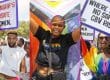


The landmark court case brought by two women fighting for the right to marry in Botswana has taken another step forward.
Bonolo Selelo and Tsholofelo Kumile are challenging the constitutionality of Botswana’s Marriage Act, arguing that it discriminates against them by failing to recognise civil same-sex marriages.
On Tuesday, the Botswana High Court heard applications from parties seeking to participate in the marriage equality case ahead of the main hearing, which is set to take place later this year.
Rights Groups and Religious Organisations Seek to Join Case
LEGABIBO, Botswana’s leading LGBTIQ+ rights organisation, was among those applying to intervene in the case. If admitted, the organisation will be able to present arguments in support of marriage equality to assist the court in reaching its decision.
Others seeking to participate include human rights scholar Dr Onthatile Moeti, the Evangelical Fellowship of Botswana, the House of Churches, and the Dingwetsi Association.
In a statement, LEGABIBO said it believes the outcome of the case extends far beyond the couple who brought the application.
“The outcome could shape how Botswana’s Constitution protects equality, dignity and access to civil marriage for LGBTIQ+ people now and in the future.”
The organisation further argued that it can assist the court by providing expertise on constitutional rights, as well as insight into the practical impact that exclusion from civil marriage has on LGBTQI+ communities.
Government Opposes Marriage Equality Challenge
The Botswana government is opposing the case, along with several religious and cultural organisations, which argue that recognising same-sex marriages would conflict with their beliefs, values and traditions.
Speaking outside the court in her capacity as both a human rights activist and a Christian, Tshepo Ricky Kgositau said the case is fundamentally about love.
“It’s about the right of everybody to love who they love. It’s about the right to be able to essentially be able to form a family,” she said.
Court to Rule on Participation Before Main Hearing
The High Court is expected to rule on the intervention applications in early September.
The main hearing on the constitutional challenge has been scheduled for 22 and 23 October, when the court will consider the merits of the marriage equality case.
If Bonolo Selelo and Tsholofelo Kumile succeed, Botswana would make history as only the second African country to legalise same-sex marriage, following South Africa, which became the continent’s first nation to do so in 2006.