

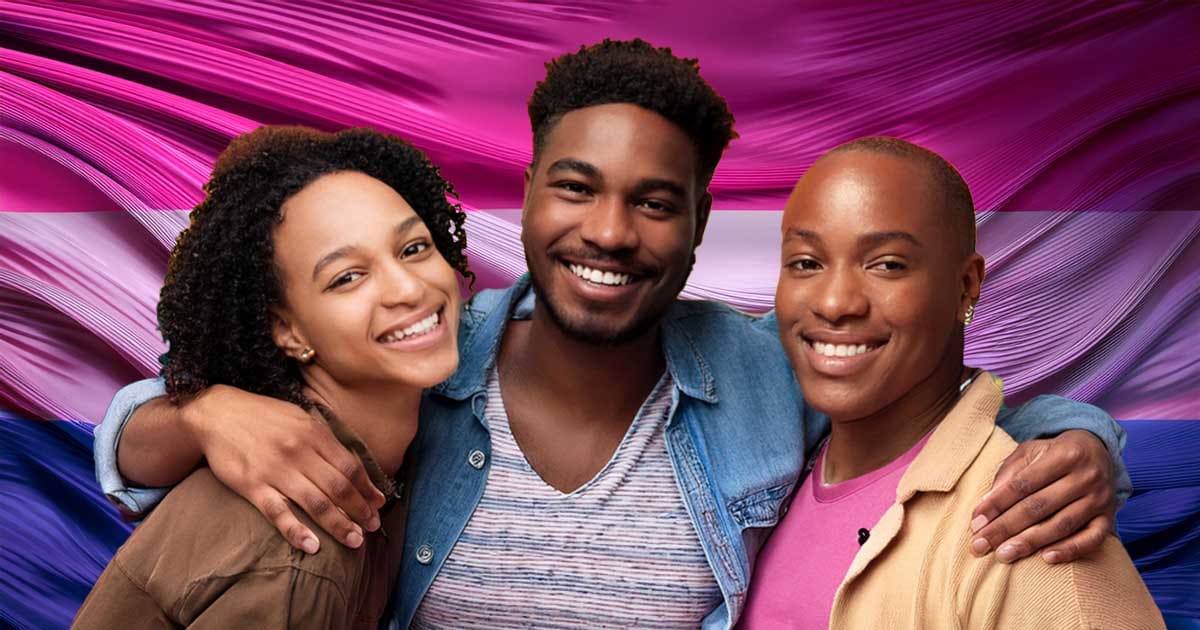
Bisexuality is one of the most common – and most misunderstood – identities in the LGBTQ+ community.
Despite making up a large portion of queer people, bisexual individuals often face stigma and erasure from both outside and inside the community.
So, what exactly does it mean to be bisexual, and why does it matter? Let’s break it down.
What Is Bisexuality?
At its core, bisexuality means being attracted to more than one gender. This attraction can include men, women, non-binary people, and gender-diverse individuals.
It’s not about having a “50/50” split of attraction: some people may be more attracted to one gender and less to another, or be attracted to more than two gender identities – it looks different for everyone.
The term bi+ (or bisexual+) is sometimes used as an umbrella, including related identities like pansexual, fluid, polysexual, queer, or those who simply prefer not to label themselves.
How Big Is the Bi+ Community?
Research suggests that the number of people who identify as bisexual has been increasing over the years. In fact, bisexual people may actually make up the largest group in the LGBTQ+ community.
- In 2022, research by the UK’s Office for National Statistics found that 44.9% of people who identify as LGB say they are bisexual.
- A 2023 Ipsos poll found that 3% of South African adults identify as bisexual and 1% as pansexual or omnisexual (which some people include under the bisexual umbrella).
- That’s similar to the same poll finding that on average 4% of adults identify as bisexual across 30 countries.
- Younger generations are more likely than older generations to identify as bisexual, with a whopping 9% of Gen Z identifying as bi.
Despite these numbers, bisexual people often feel invisible or sidelined compared to gay and lesbian identities.
Common Myths About Bisexuality (And Why They’re Wrong)
“It’s just a phase.”
Bisexuality is a valid orientation, not a stepping stone to being gay or straight.
“They’re just experimenting.”
Attraction to more than one gender is real – it’s not about curiosity or indecision.
“Bi people can’t be faithful – they’re promiscuous or likely to cheat.”
Just like everyone else, bi people can be monogamous or polyamorous – their orientation doesn’t dictate their faithfulness.
“You can’t be bisexual if you’ve only dated or had sex with one gender”
Being bisexual is about attraction, not necessarily a person’s dating or sex life. Some bisexual people feel attracted to more than one gender but may never act on that attraction. If they identify as bisexual, their sexuality is totally valid.
“Straight people who’ve kissed or had sex with someone of the same gender must be bi”
Not necessarily – people can have sex with someone of a gender that they’re not actually attracted to in many circumstances. This often happens in same-sex environments, like prisons or boarding schools.
“Men can’t be bisexual.”
Bisexual men exist – and they face particularly harsh stigma from both straight and gay communities.
“Trans people can’t be bi, and bi people can’t be attracted to trans people.”
Gender identity and sexual orientation are separate. Many bi people are attracted to trans and non-binary people.
The Stigma Bi People Face
Unfortunately, bisexual people often experience discrimination from both straight and queer communities. They are sometimes labelled as “confused,” “greedy,” or “untrustworthy.”
This stigma has serious consequences: studies show bisexual people report higher rates of anxiety, depression, suicidal thoughts, and violence than both straight and gay/lesbian people. Many bi people also feel pressure to hide their identity, especially at work.
Why Visibility Matters
Bisexual people’s identity is often invisible or not taken seriously, but they deserve the same respect and recognition as every other part of the LGBTQ+ family. Debunking harmful myths and affirming bisexual identities is crucial for mental health, equality, and building a truly inclusive queer community.
The Bottom Line
Bisexuality is real, valid, and here to stay. Whether someone is dating a man, woman, or non-binary person, their bisexuality doesn’t “disappear.” It’s high time bisexual people were embraced and celebrated – not erased.
Bisexuality isn’t confusion. It’s clarity: attraction to more than one gender. And it deserves full recognition within and beyond the LGBTQ+ community.