

Her name was Hermina Khoza. She was 38 years old, openly queer, loved by her community in Bekkersdal, Gauteng. On 30 March 2026, someone shot her dead in a suspected hate crime.
Her family is grieving. Her community is grieving. And her name will join the long list of names that MambaOnline documents month after month in its LGBTIQ+ Rights Watch, a list that has been growing without pause for years.
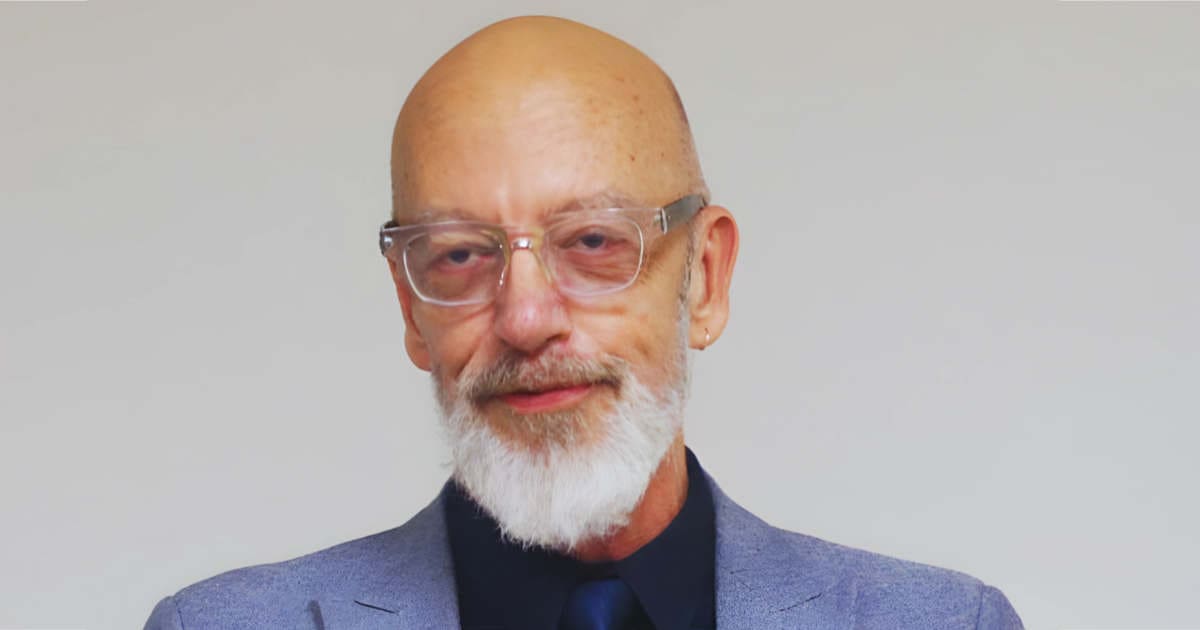
I am 63 years old. I have been gay my whole life, though for the first part of it, I had no word for what I was.
I grew up in the platteland in the 1960s and early 70s. We moved to Pretoria in 1977. This was a time when homosexuality was not only illegal but literally unspeakable. I knew something was different about me long before I had language for it. I pored over Queen album covers, hoping Freddie Mercury was like me. He was, but he only said so shortly before he died.
I matriculated in 1981, not knowing that my closest friend at school was as gay as I was. We were that invisible to each other, and that afraid. The threat was not abstract. It was physical, legal, and total. You could be imprisoned. You could be beaten. And when, as a young white gay man, you were conscripted, you could be taken to Ward 22 at 1 Military Hospital in Voortrekkerhoogte, where a psychiatrist named Aubrey Levin administered electric shocks to “cure you” of yourself.
Between 1971 and 1989, Levin’s Aversion Project subjected hundreds of gay conscripts to chemical castration, aversion therapy, and forced sex reassignment surgery. Some died on the operating table. The South African Medical Association apologised in 1995. Nobody went to prison.
But this is not a history lesson. I am telling you where we came from so you understand what it means when I say that we are sliding back.
After school, I discovered what so many of us discovered: an underground world that repression had forced into existence. Pretoria had its bars and clubs. Johannesburg had more. They were dotted all over the country, open secrets, every single one of them. There were men and women who knew each other, who looked out for each other, who built something that could only be called family. For many of us, biological family had closed its doors.
We cruised parks at night, knowing the danger. We learned each other’s faces. We created a community the way people create community when the law treats their existence as criminal: tightly, loyally, with the particular warmth of people who have chosen each other.
That world was not romantic. It was born of repression, and it carried repression’s scars. But it was ours.
In 1994, homosexuality was decriminalised. In 1996, South Africa became the first country in the world to enshrine constitutional protection for LGBTQ+ people. In 2006, we became the first and only African nation to legalise same-sex marriage. Simon Nkoli was a Black gay man who stood trial for treason in the Delmas dock, came out to his comrades in prison, and changed the ANC’s position on gay rights through sheer force of character. He had helped make this happen. So had Edwin Cameron, Zackie Achmat, Bev Ditsie, and dozens of others who put their bodies and their freedom in the path of a hostile state.
These were not politicians. These were activists. People who had nothing to gain and everything to lose.
And then, gradually, the underground world that repression had built began to dissolve. We were assimilated, or so the story went. We no longer needed our own spaces because we were now equal citizens. The bars closed one by one. Last February, Johannesburg’s Babylon the Bar shut its doors after fifteen years. The management cited hookup apps cannibalising foot traffic.
Our community newspaper Exit, founded in 1982, changed hands and faded. MambaOnline, the most important LGBTQ+ news platform in the country, survives on reader donations and goodwill. GaySA Radio, which I helped launch in 2016, runs on unpaid volunteers with no sustainable funding model. When we asked the community to support it, too many people asked why we needed it.
That question, why do we still need specifically gay spaces, gay media, gay organisations, turned out to be the most dangerous question we ever asked ourselves. The answer is walking toward us right now.
For nearly a decade, I worked as an activist. I was employed by OUT LGBT Well-being in their Mafikeng office and co-founded Gay Umbrella there with Mildred Maropefela. OUT became one of the most important LGBTQ+ health organisations in the country, running HIV testing, antiretroviral programmes and PrEP access for thousands of gay and bisexual men.
Engage Men’s Health, operating under OUT, had 2,000 men on life-saving antiretroviral therapy and 4,000 on PrEP. Then, in January 2025, Donald Trump signed a stop-work order on all PEPFAR funding. By April 2025, OUT’s offices in the Eastern Cape and Gauteng had closed. Engage Men’s Health closed entirely, auctioning its assets to pay over dozens of staff members who were out of work overnight. Aurum’s Pop Inn service, another pillar of LGBTQ+ healthcare, closed at the end of April 2026. How many other organisations have closed that we don’t know about?
We have been told to go to government clinics for our PrEP and PEP.
I am a 63-year-old gay man. I know what it is to walk into a government clinic, wait for hours in a queue, and then need to explain why I need PrEP, or why I am there at all. I know the look. I know the silence. I know what discrimination means when it happens not as a policy but as a gesture: a tone of voice, a question not asked, a referral not made. The Constitution protects me on paper. In practice, I expect to be looked at funny. I expect to be made to feel like a problem.
And I am one of the lucky ones. I am educated, employed, and have access to private healthcare, if I can afford it. Think about the young gay man in a township who has just lost his only access to affirming, non-judgmental HIV care. Think about the lesbian woman in a rural area who no longer has an organisation to call.
Meanwhile, the violence continues without pause. Criminal syndicates have turned Grindr into a hunting ground, luring gay men to locations where they are tied up, assaulted and robbed. I know this not as a statistic but as a memory. I was one of those men.
I was held for four hours, naked, while four men drained my bank accounts and worked new victims on the same app in the same room. Since I wrote about that experience for MambaOnline in 2023, the cases have multiplied. The trial of seven accused Grindr gang members in Johannesburg has been delayed so many times by state incompetence that those men have sat in custody for over two years without a verdict.
In February 2025, Muhsin Hendricks, South Africa’s first openly gay imam, Islamic scholar and LGBTQ+ rights activist, was shot dead in Gqeberha as he was leaving to officiate an interfaith marriage. His murder remains unsolved.
In Bekkersdal last month, Hermina was shot dead. In 2024 alone, more than twelve LGBTQ+ people were murdered in this country in suspected hate crimes. The list of names keeps growing, and most South Africans do not know a single one of them.
We have out politicians. They wear the identity but not the obligation. The constitutional protections that exist were fought for by activists who are now mostly dead or ageing. The politicians who inherited those protections have treated them as settled business. They are not settled. They are under active threat, not from a government that has changed the law, but from a society that never changed its mind, and a state that has allowed the infrastructure of safety to collapse around us while issuing statements of concern.
Here is what I want you to understand, and this is the warning I am asking you to carry: what is happening right now is not a crisis that appeared from nowhere. It is the predictable result of a community that dismantled its own infrastructure because it believed the fight was won.
The bars where we found each other are gone. The organisations that kept us healthy are closing. The media that told our stories is struggling to survive. The app that replaced the dark and dangerous park as a place to find connection has become as dark and dangerous, if not more so.
In 1735, two men were taken from Robben Island and drowned at sea for the crime of loving each other. One was Klaas Blanc, a Khoikhoi prisoner. The other was Rijkaert Jacobsz, a Dutch sailor. Three centuries later, a queer woman is shot dead in Bekkersdal and her name will be forgotten within weeks unless someone insists on remembering it.
Laws are only as strong as the institutions and communities that enforce and defend them. Ours are being dismantled, one closed clinic and one shuttered venue and one underfunded website at a time.
So I ask, and I mean this as the most serious question I have asked in thirty years of activism: when our healthcare is gone, when our media is gone, when our organisations are gone, when our gathering places are gone, who is going to speak for us?
Because the answer, right now, is almost nobody.
And we have been here before.
Hendrik Baird is a gay South African activist and media professional. He has worked with OUT LGBT Well-being, co-founded Gay Umbrella in Mafikeng, and contributed to GaySA Radio. He spearheaded the campaign to ban Steven Anderson from entering the country. He was a victim of the Grindr Gang and wrote about his experience for MambaOnline in 2023.


One Comment
Brilliant article. I think the bottom line is that the LGBTQ+ community needs to wake up to these facts. Most straight/ cisgender people are not going to help us, we will need to do it ourselves. Address internalized queerphobia for starters; learn how to stand together in spite of our differences; realize that activism is the only answer. And maybe open a new bar or club where people can meet in person, not via a dodgy app that puts lives in danger.